


Whispering Seaweed — where the sea finds its voice in the heart of the country
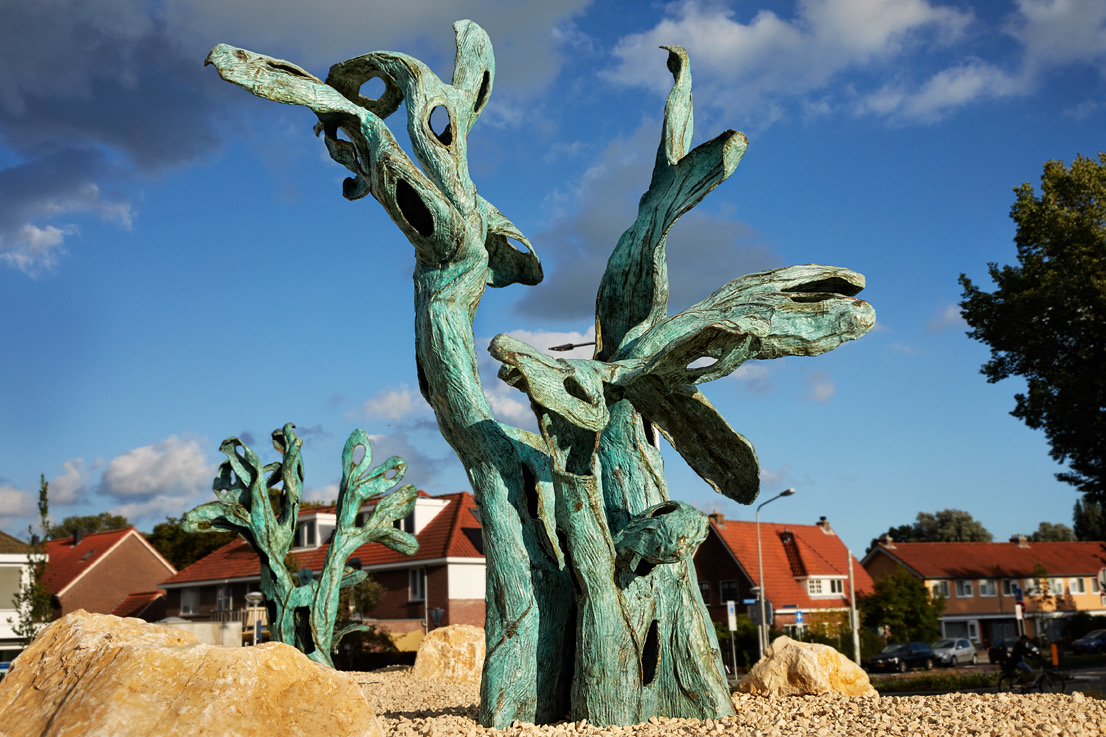
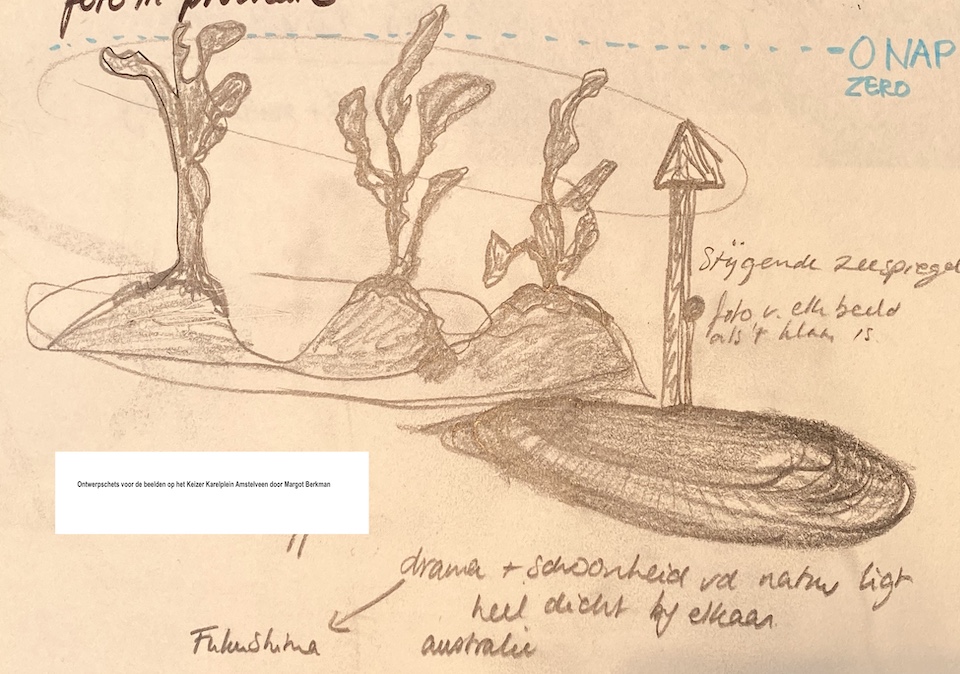
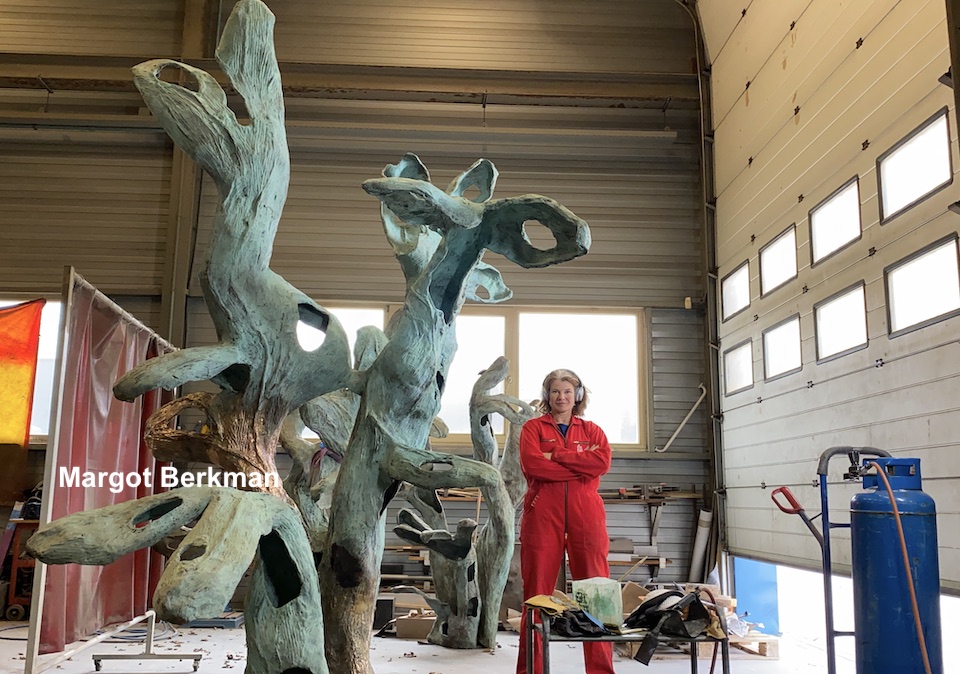
In the green of Amstelveen, three monumental forms rise from the undulating landscape of Keizer Karelplein. Whispering Seaweed by Margot Berkman consists of three sculptures, a staggering 4.5 meters tall—slender, organic shapes that bear the silhouette of seaweed.
They appear not to have been placed, but to have grown.
The square’s name carries a historical undercurrent. In his time, Emperor Charles gave impetus to early forms of water management because this area—present-day Amstelveen—was regularly flooded. What is now an urban landscape was once a fluctuating zone between land and water. Without dikes, there would be no lawn here, but a body of water. And where there is water, there is seaweed.
Berkman makes this hidden history tangible.
The three sculptures, as it were, mark the imaginary depth of the water that could have existed here. Their height suggests an underwater world rising above the ground. Standing among the forms, you no longer find yourself on a square, but on an imaginary seabed.
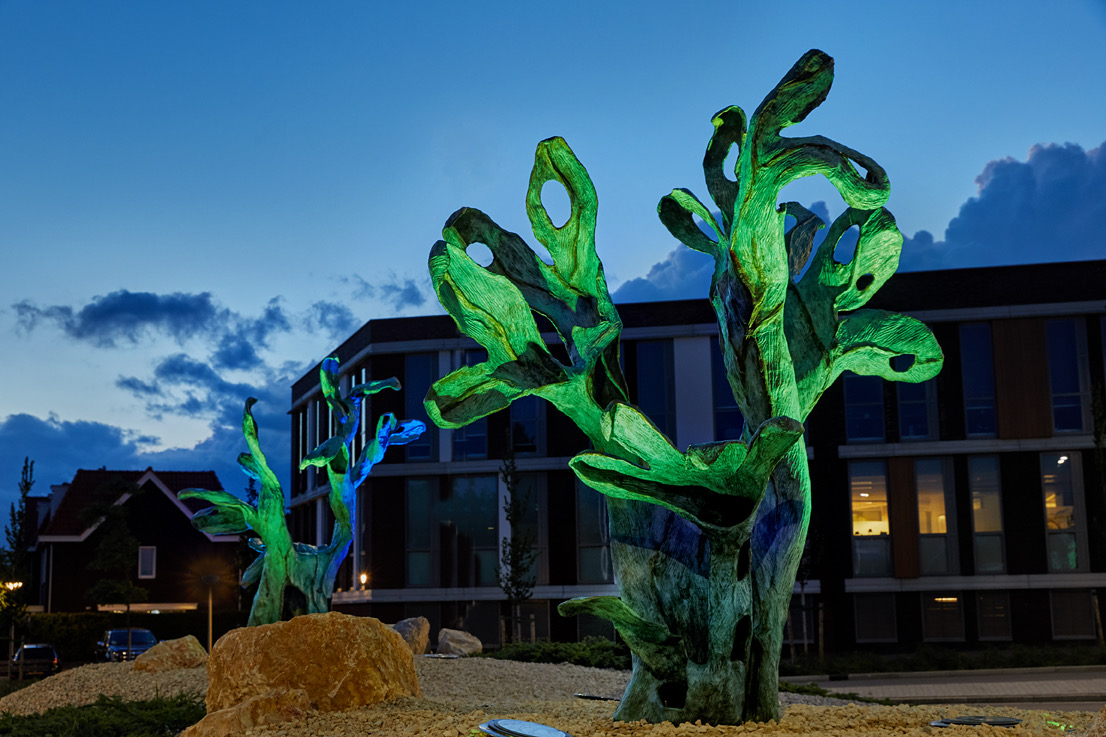
As evening falls, a subtle transformation takes place. The lighting in and around the sculptures causes their contours to softly move in the darkness. Shadows shift, lines appear to undulate. It is as if the sculptures are actually waving in water—a tranquil choreography of light and form. The square transforms into a nocturnal seascape, a place where breath, rhythm, and silence converge.
The choice of three different seaweed forms is based on a Japanese philosophical principle: ichie go ichie—one moment, one encounter.
Each experience is unique and unrepeatable. Just as no wave is identical to the last, no two perceptions of this work are the same. The light is different, the wind varies, the viewer changes.
The three sculptures represent this uniqueness. They are related, but not identical. Together, they form a rhythm in the undulating terrain—a composition that is constantly recreated in the encounter between work, place, and viewer.
Whispering Seaweed is thus more than a reference to the sea or history. It is a reminder of our ongoing relationship with water—physical, historical, and existential. The work whispers that what we call solid was once fluid. And that what we control still surrounds us.
On Keizer Karelplein, the sea breathes again. Not in waves, but in light. Not in water, but in form. And always—in one unique moment at a time.
Whispering Seaweed
With exhibiton ‘Waves of Breath’ by curator Katja Rodenburg in the Cobra museum in Amstelveen and a soundscape specially created by Will Calhoun (grammy award winning drummer Living Color, New York)